Vertical
Farming
Advanced agricultural systems intended to grow food efficiently, use less land and bring production closer to the communities where food is consumed.
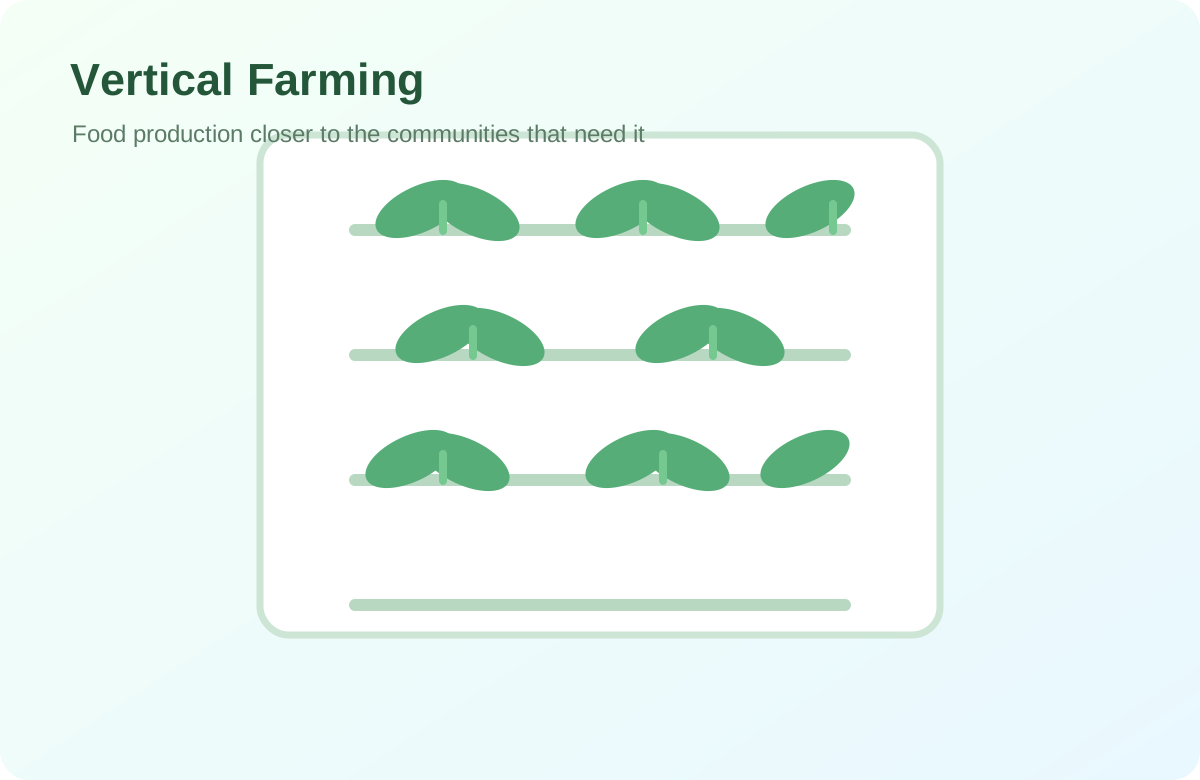
Food systems designed around the place they serve.
Vertical farming is a core part of the portfolio, complementing power, water and transportation with more local and efficient food production.
Use space vertically
Stacked growing environments can produce more food from a smaller physical footprint than conventional field layouts.
Closer to demand
Locating production near communities can shorten supply chains and create new local food options.
Integrated infrastructure
Vertical farming can be considered together with dedicated electricity and water systems for more self-sufficient developments.
Design starts with crop, climate and market.
A useful project review needs the target crops, local food demand, building or land availability, water supply, electrical supply, climate, labor conditions and desired production scale.
- Urban and peri-urban food production.
- Island and remote-community food resilience.
- Hotels, resorts and large developments.
- Humanitarian and educational projects.
One planning conversation
For self-sufficient projects, evaluate vertical farming with atmospheric water, desalination and generation rather than treating each system separately.